Thursday, September 12, 2013

What was the relationship between American imperialistic desires and the closing of the frontier?

Some historians have argued that the closing of the American frontier, which occurred with the census of 1890, actually promoted imperialism. Historian Frederick Jackson Turner, speaking in 1893, argued that the existence of a frontier, what he called "free land" in the West had always been important in promoting democracy in the United States. This view, while widely discredited by modern historians, expressed a belief among many late nineteenth-century Americans that expansion was essential to...

Some historians have argued that the closing of the American frontier, which occurred with the census of 1890, actually promoted imperialism. Historian Frederick Jackson Turner, speaking in 1893, argued that the existence of a frontier, what he called "free land" in the West had always been important in promoting democracy in the United States. This view, while widely discredited by modern historians, expressed a belief among many late nineteenth-century Americans that expansion was essential to maintaining America's economic and cultural growth. With no more frontier left on the North American continent, this interpretation goes, Americans began to look elsewhere, both in the Caribbean and in the Pacific, to satisfy their ambitions. Many imperialists, like Theodore Roosevelt in his famous speech, "The Strenuous Life," were able to cast imperialism as a challenge that his generation of Americans could rise to after the struggle to subjugate the Native Americans in the West (which was not, whatever Jackson Turner says, "free land). Having conquered the West, Roosevelt argued, it was time for American men to rise to "one of the great tasks set modern civilization": to spread American civilization and power overseas. On the other hand, it is important to remember that many Americans had been advocating imperialism in a number of areas--the conquest of the Caribbean and Central America, for instances, as well as gaining control over Hawai'i--for decades before the Census Bureau declared the frontier "closed". So if the closure of the frontier was a factor encouraging imperialism, it was one of many.

Musing in the country churchyard among the simple graves of the villagers, the narrator of Gray's "Elegy" is led to imagine his own death and...

The poet/speaker is concerned with death and how it should humble people of all classes. He is genuinely pondering and even praising the humble lives represented by the lowly graves he sees, and he uses these meditations on death to consider his own epitaph. He will take the same approach and write his own epitaph with honesty and humility.


The speaker praises the farmers and "their useful toil." He says that the wealthy deceased people...

The poet/speaker is concerned with death and how it should humble people of all classes. He is genuinely pondering and even praising the humble lives represented by the lowly graves he sees, and he uses these meditations on death to consider his own epitaph. He will take the same approach and write his own epitaph with honesty and humility.


The speaker praises the farmers and "their useful toil." He says that the wealthy deceased people should not mock nor fault ("impute," line 37) the poor if they have no trophies nor any grand tombstones. The poor perhaps did not have the opportunity to achieve fame and fortune. "Perhaps in this neglected spot was laid / Some heart once pregnant with celestial fire; / Hands that the rod of empire might have swayed." The speaker certainly is making the point that the poor lived lives just as useful and full as those of the rich. Had they other opportunities, they might have garnered trophies and fame. But trophies and monuments are irrelevant after death. Death is the great equalizer. Everyone dies. An overarching theme in this context is that everyone should live life to the fullest, regardless of social class. A grand tombstone might say something about the deceased person's wealth, but it doesn't say much about the substance of that life. A relatively unknown farmer might easily have led a more meaningful life.


The speaker admires the difficult but rewarding lives of these humble people, and he criticizes the wealthier or more famous people who seem to need some glorious monument. So, when he expresses humility in his own epitaph, it seems that he is showing solidarity with the poor, humble people of the graveyard. In the epitaph, he notes that he's had no fame and no fortune. He has lived a somewhat sad and difficult life. To whoever gazes upon his epitaph, his wish is that he/she will not wonder about his merits or flaws. Since he is now dead, it serves no purpose to judge his successes and failures. By this point, it is in God's hands. Dying without fame and fortune, he expresses his camaraderie with the humble lives he's described in earlier stanzas.

How do liverworts, mosses and hornworts differ in appearance?

Yes. Liverworts, mosses, and hornworts look different from one another. Each type of plant has a unique set of physical characteristics, as explained below.


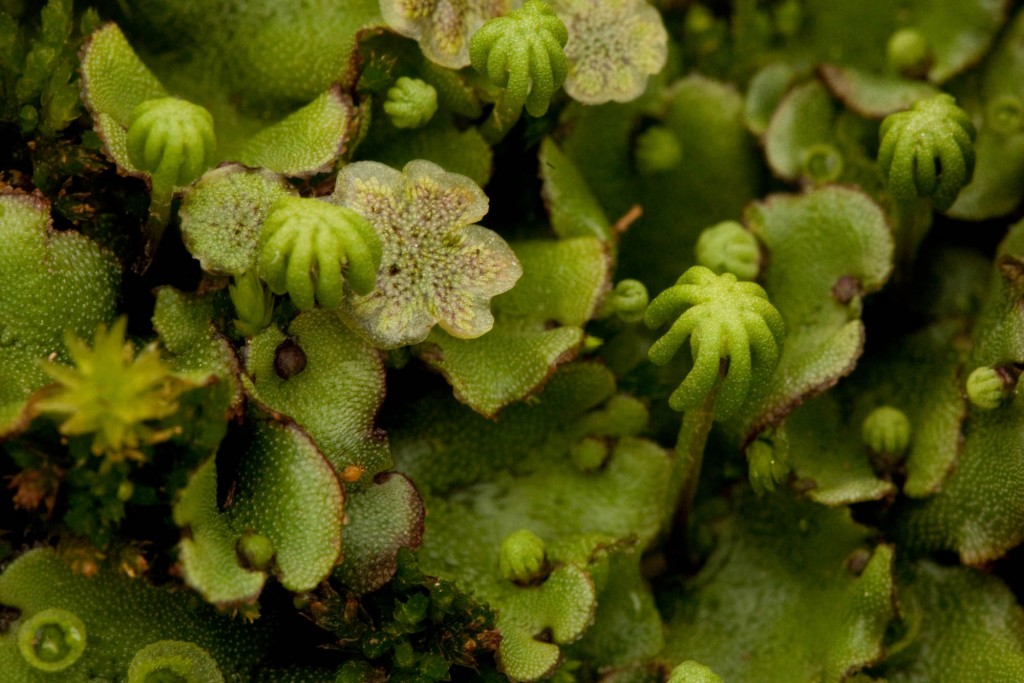
  • Liverworts have thorny leaves that do not have ribs. Liverworts can be either thallose or leafy. Thallose liverworts have large and rubbery leaves with flower-like capsules that contain spores for reproduction. Leafy liverworts have smaller leaves that are arranged on a small stem.

  •  Mosseslook velvety. The stems of mosses...

Yes. Liverworts, mosses, and hornworts look different from one another. Each type of plant has a unique set of physical characteristics, as explained below.


  • Liverworts have thorny leaves that do not have ribs. Liverworts can be either thallose or leafy. Thallose liverworts have large and rubbery leaves with flower-like capsules that contain spores for reproduction. Leafy liverworts have smaller leaves that are arranged on a small stem.

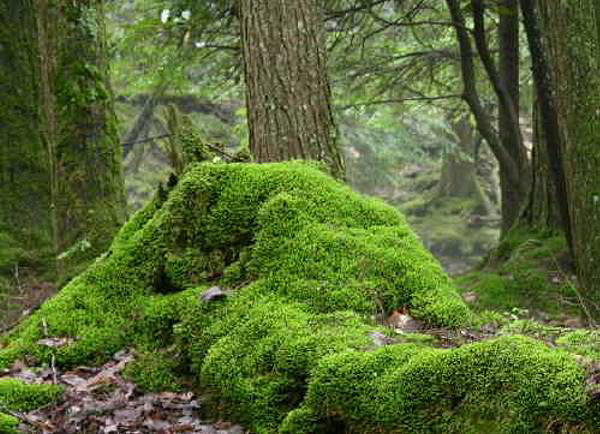
  •  Mosses look velvety. The stems of mosses are minute and contain simple leaves. Acrocarp is a group of mosses that stand upright. Pleurocarp a mosses that creep.


  •  Hornworts are made of thalli. Thalli are irregularly lobed and branching bodies.

Liverworts, mosses, and hornworts are examples of a group of plants called bryophytes. Bryophytes are small, flowerless green plants that lie low to the ground. Bryophytes lie low to the ground because they do not have a vascular system to carry nutrients high above the ground.

In "Young Goodman Brown," what is the wickedness that Brown witnesses and how are he and Faith involved in it?

In the story, the wickedness that Young Goodman Brown witnesses is a witches' Sabbath, a meeting of those in Salem who are in league with the Devil. There were a number of people there, "all of excellent repute," including "church-members of Salem village, famous for their especial sanctity." In addition, there were "men of dissolute lives and women of spotted fame, wretches given over to all mean and filthy vice, and suspected even of horrid...

In the story, the wickedness that Young Goodman Brown witnesses is a witches' Sabbath, a meeting of those in Salem who are in league with the Devil. There were a number of people there, "all of excellent repute," including "church-members of Salem village, famous for their especial sanctity." In addition, there were "men of dissolute lives and women of spotted fame, wretches given over to all mean and filthy vice, and suspected even of horrid crimes." So, alongside all of the supposedly pious and righteous people of the town, including the deacon and the pastor, are all of those who are known sinners, harlots, and criminals.


He and Faith are involved in it because, apparently, they each have had some dealings with the Devil (and have committed sins) as well. Brown knowingly met the Devil in the forest, and, evidently, Faith has met with him, too. A number of "converts" are brought forward, and Brown and Faith are among their number. They are charged with the duty of tempting others to sin. The Devil tells them, "'Now are ye undeceived! Evil is the nature of mankind. Evil must be your only happiness.'" The converts are welcomed by the hellish congregation, and Brown suddenly implores Faith to "'Look up to heaven, and resist the Wicked One!'" and, in the next moment, he finds himself alone, in the forest.

Wednesday, September 11, 2013

How can I relate this claim to the theme of Frankenstein: the creature is more human than Victor himself?

During the story, the creature has a realization about the nature of humanity, a realization that is certainly supported by his and others' actions in the text. Upon learning about the Native Americans who suffered a "hapless fate" at the hands of European settlers who came to the New World, he asks,


"Was man, indeed, at once so powerful, so virtuous, and magnificent, yet so vicious and base? He appeared at one time a mere...

During the story, the creature has a realization about the nature of humanity, a realization that is certainly supported by his and others' actions in the text. Upon learning about the Native Americans who suffered a "hapless fate" at the hands of European settlers who came to the New World, he asks,


"Was man, indeed, at once so powerful, so virtuous, and magnificent, yet so vicious and base? He appeared at one time a mere scion of the evil principle, and at another as all that can be conceived of noble and godlike."


The creature's behavior, throughout the text, supports this notion of human nature. He is capable of both extreme good and kindness, such as when he saves the little girl from drowning, brings firewood to the DeLaceys to ease their burdens, and sympathizes with Safie and Felix and their sad story. However, he is also capable of malice and evil -- he kills William, he frames Justine for murder, and he murders Clerval and Elizabeth. In fact, one of the things that makes his later villainy so upsetting is that he truly did begin life as a benevolent and thoughtful being. In this way, however, he is truly more human than Victor because the creature embodies both of humankind's extremes.


Victor, on the other hand, really doesn't ever behave in a selfless or compassionate way. He thinks only of himself first; even when he destroys the mate he promised the creature and the creature vows to be with him on his wedding night, Victor neglects to consider the life of his bride and only thinks of his own potential death. He is incredibly self-centered. Victor wanted to create life for the glory of it, to be hailed as a creator of an entire new race. He doesn't ever do anything for someone else that wouldn't also benefit himself. In this sense, then, he is less human than his creature because he does not embody the two extremes that Shelley suggests are inherent to humankind.

Tuesday, September 10, 2013

Does density affect the evaporation rate of a liquid?

Density does affect the rate of evaporation. Liquids with a higher density have a lower rate of evaporation. This means that honey will have a lower rate of evaporation as compared to water, which will have a lower rate of evaporation as compared to alcohol. This is because honey is more dense than water, and water is more dense than alcohol.


One way to think about how density affects the rate of evaporation is to...

Density does affect the rate of evaporation. Liquids with a higher density have a lower rate of evaporation. This means that honey will have a lower rate of evaporation as compared to water, which will have a lower rate of evaporation as compared to alcohol. This is because honey is more dense than water, and water is more dense than alcohol.


One way to think about how density affects the rate of evaporation is to consider the relationship between density and intermolecular forces. Denser substances have higher intermolecular forces, which causes molecules to be closer to each other. This means that more heat needs to be supplied to overcome these strong intermolecular forces. Hence the rate of evaporation is slow for denser materials as compared to less dense materials. 


Apart from density, other features such as the molar mass also impact the rate of evaporation.


Hope this helps. 

How does the Receiver of Memory's training proceed in The Giver?

Jonas initially experiences simple memories and then is gradually exposed to more difficult ones.

The initial training for Receiver of Memory is a little confusing for Jonas.  He had no idea what to expect, because no one in the community really knows about what the Receiver of Memory does.  Jonas is even told to keep his training secret, not discussing it with any other community members.


The Receiver of Memory’s work is so secret because he essentially knows all of the community’s secrets.  The community has no sense of history because citizens are prohibited from having books and as far as they know things are as they always have been.  The community tightly controls all information in an effort to maintain Sameness.  Only the Receiver of Memory even has books.


The training begins with the old man, who tells Jonas to call him The Giver, sharing with Jonas some concepts that he has never previously experienced.  He shares with him the idea of snow, a sled on a hill, and sunshine.  None of these things exist in Jonas’s community under the control of Sameness.


Memories are shared through some kind of special sense the two share.  The Giver just puts his hands on Jonas's back and he can see what the old man remembers.  This is called the Capacity to See Beyond.


As Jonas proceeds, he learns what the Capacity to See Beyond means.  For one thing, it means that he can see things that others can’t.  He can see the memories, yes, but in his everyday life he can also see colors.  No one else in the community can see colors.


"Of course. When you receive the memories. You have the capacity to see beyond. You'll gain wisdom, then, along with colors. And lots more."


Jonas wasn't interested, just then, in wisdom. It was the colors that fascinated him. "Why can't everyone see them? Why did colors disappear?" (Ch. 12) 


The Giver explains to Jonas that people long ago gave up color in order to pursue Sameness.  Sameness mattered more to them than seeing color, and seeing colors stood in the way of Sameness.  Jonas realizes this when he comments that color offers people choices, and it would be nice to be able to make choices, but dangerous. 


As Jonas’s training proceeds, he learns more and more things about the past.  The Giver begins to transmit pain, first in small minor ways and soon in profound ones.  He starts with a sunburn and later shows Jonas war, poverty, and death.


Going closer, he watched them hack the tusks from a motionless elephant on the ground and haul them away, spattered with blood. He felt himself overwhelmed with a new perception of the color he knew as red. (Ch. 13)


Seeing an elephant die must have made quite an impression on Jonas.  In Jonas’s community, there is no death.  There are also no elephants.  Jonas’s community does kill citizens with impunity, from infants to the elderly, but no one understands this as death because it is all kept secret. 


The pain that the trainee receives is not easy to process for such sheltered young people.  They are only twelve years old when it starts.  Jonas's predecessor, a girl named Rosemary, chose to apply for release because she did not want to live with the pain and knowledge she acquired.


Jonas has the ability to ask any question of anyone and see anything that he wishes.  This is easy, because everything in the community is recorded.  He watches a recording of the release of a newborn infant, conducted by his father.  This video, and the realization that release means death, changes Jonas’s perception of the community forever.  He had previously longed for concepts such as love and family to return to the community, but at this point he realized just how far gone his community was.

Is Charlotte Bronte's Jane Eyre a feminist novel?

Feminism advocates that social, political, and all other rights should be equal between men and women. Bronte's Jane Eyre discusses many...